Telco Customer Churn Predictor
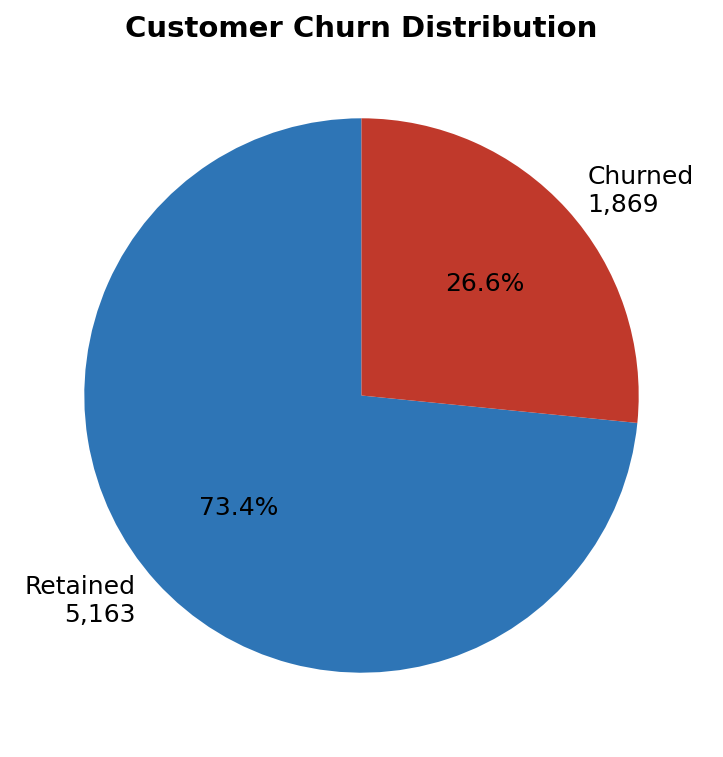
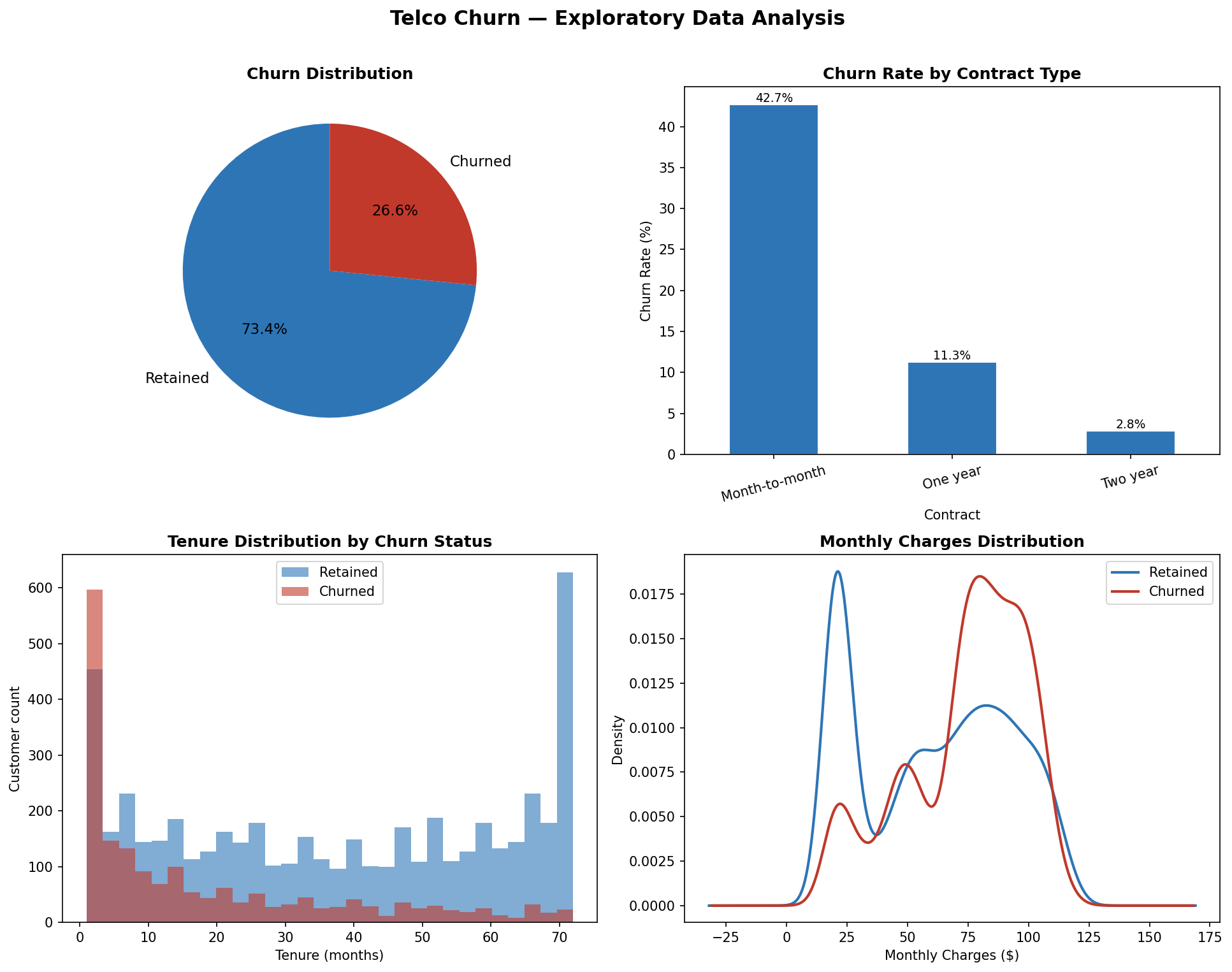
A production-grade churn prediction system trained on the IBM Telco Customer Churn dataset (7,043 customers, 26.5% churn rate). The system goes beyond a standard classifier — every prediction is accompanied by the top 3 risk factors and top 3 protective factors derived from feature contribution analysis and expressed in plain English that a retention manager can act on without reading a confusion matrix.
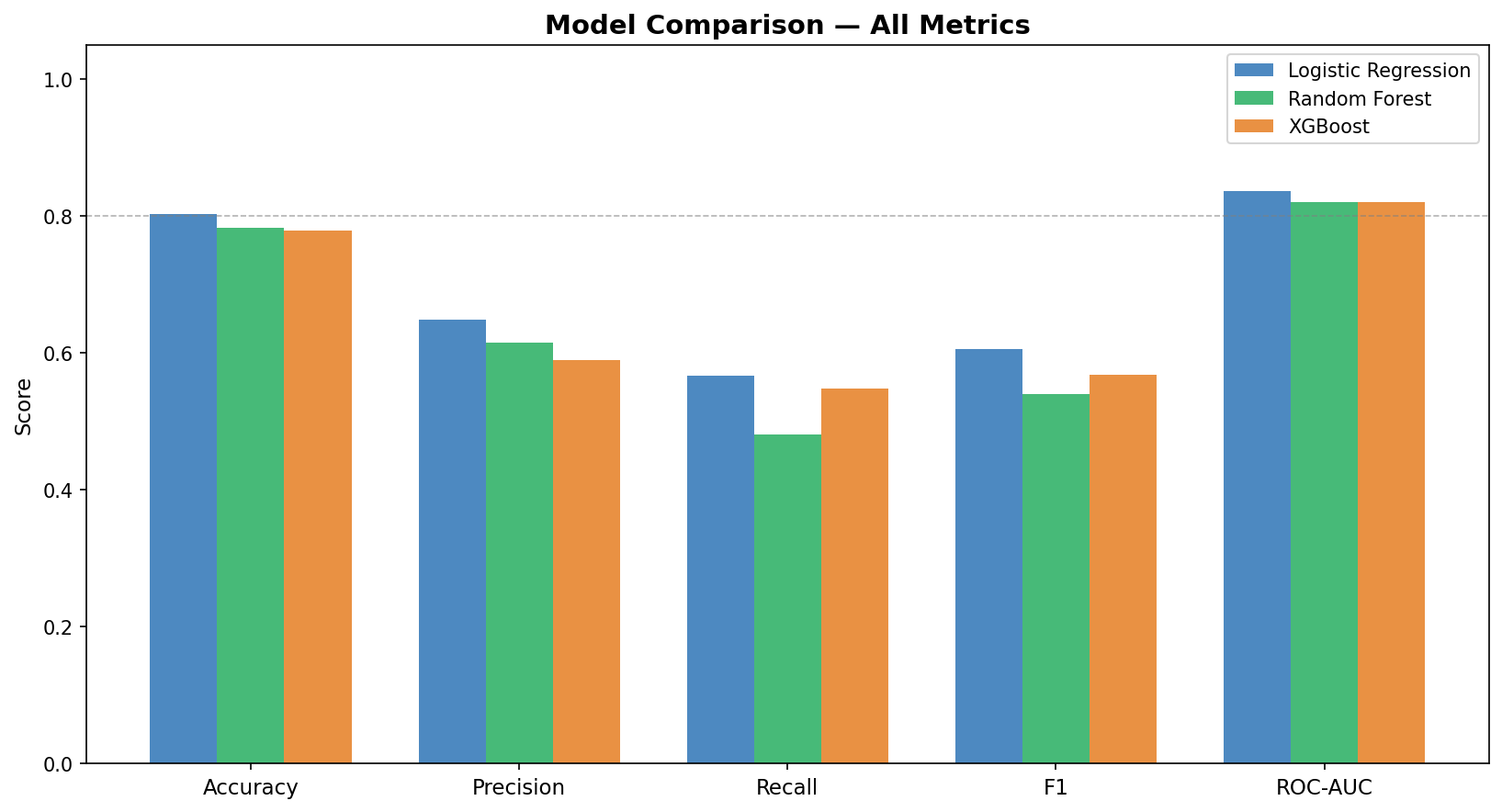
Three models were trained and compared: Logistic Regression, Random Forest, and XGBoost. Logistic Regression won by ROC-AUC (0.8362), outperforming XGBoost (0.8196) — a result explained by the fact that one-hot encoding of contract type, payment method, and internet service creates a largely linear feature space that benefits a linear classifier.
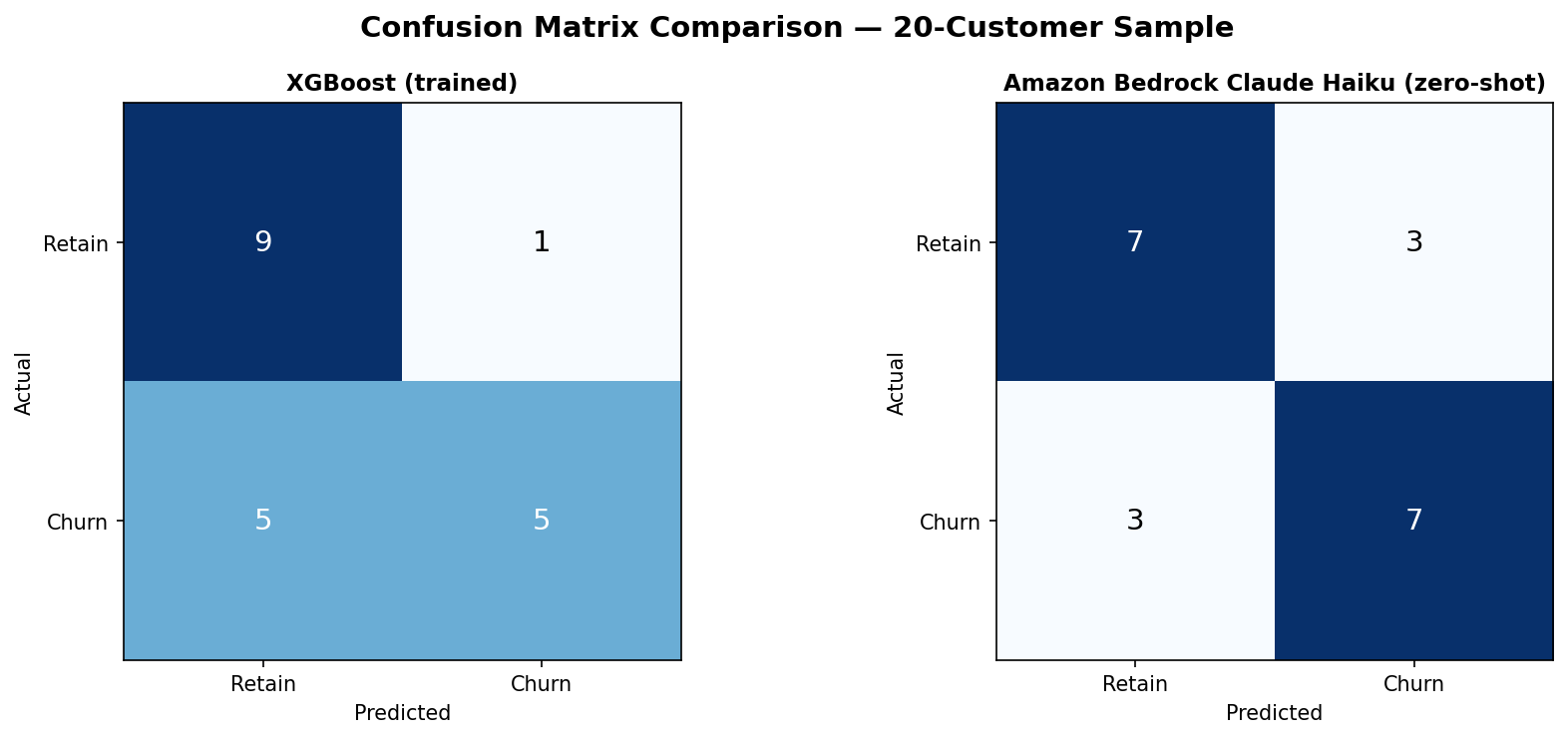
A separate benchmarking script calls Amazon Bedrock (Claude Haiku 4.5) with plain-English customer summaries and no task-specific training. On a balanced 20-customer sample, Bedrock tied the trained XGBoost classifier at 70% accuracy — demonstrating both the ceiling of zero-shot LLM classification and the value of a trained model for production use.
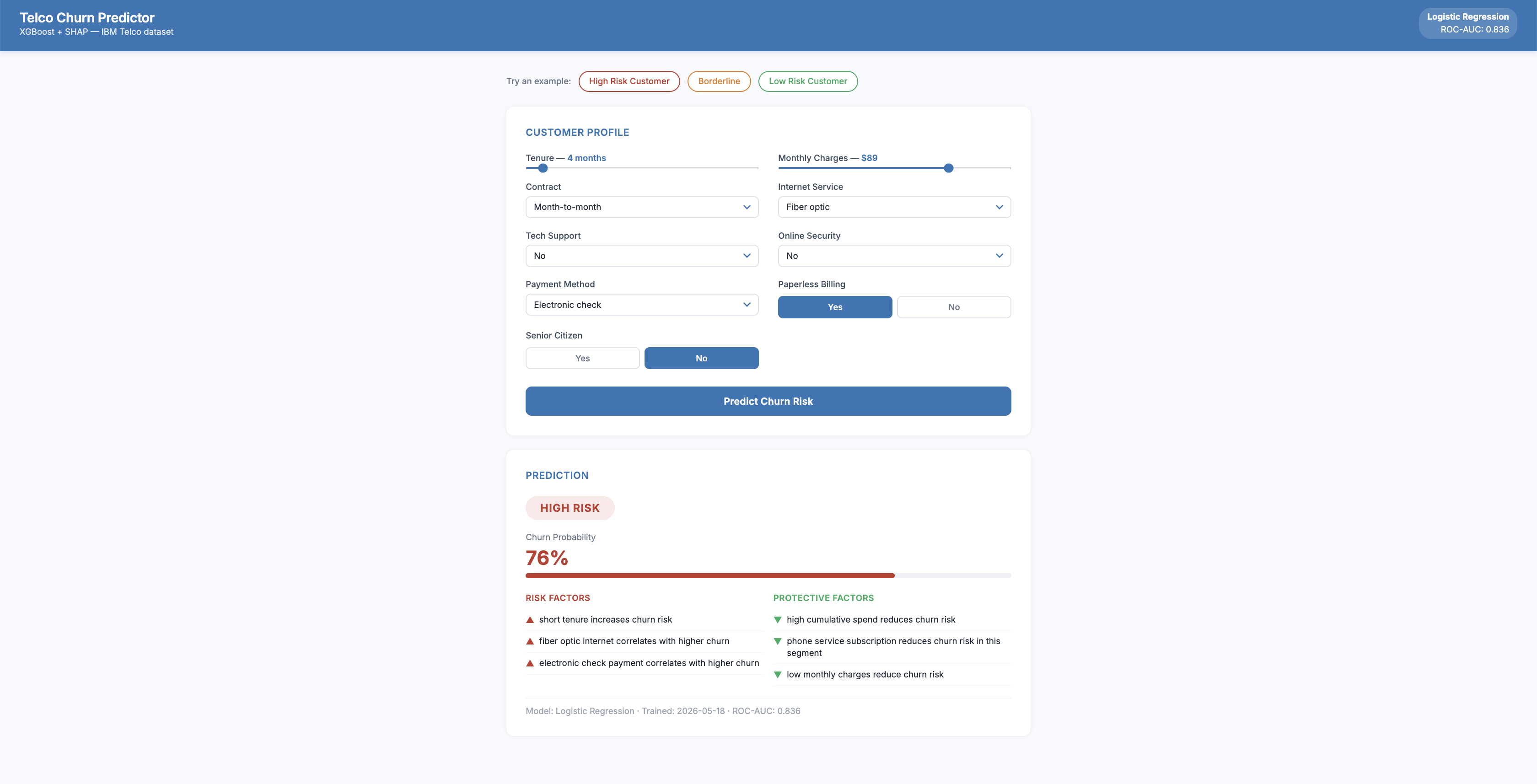
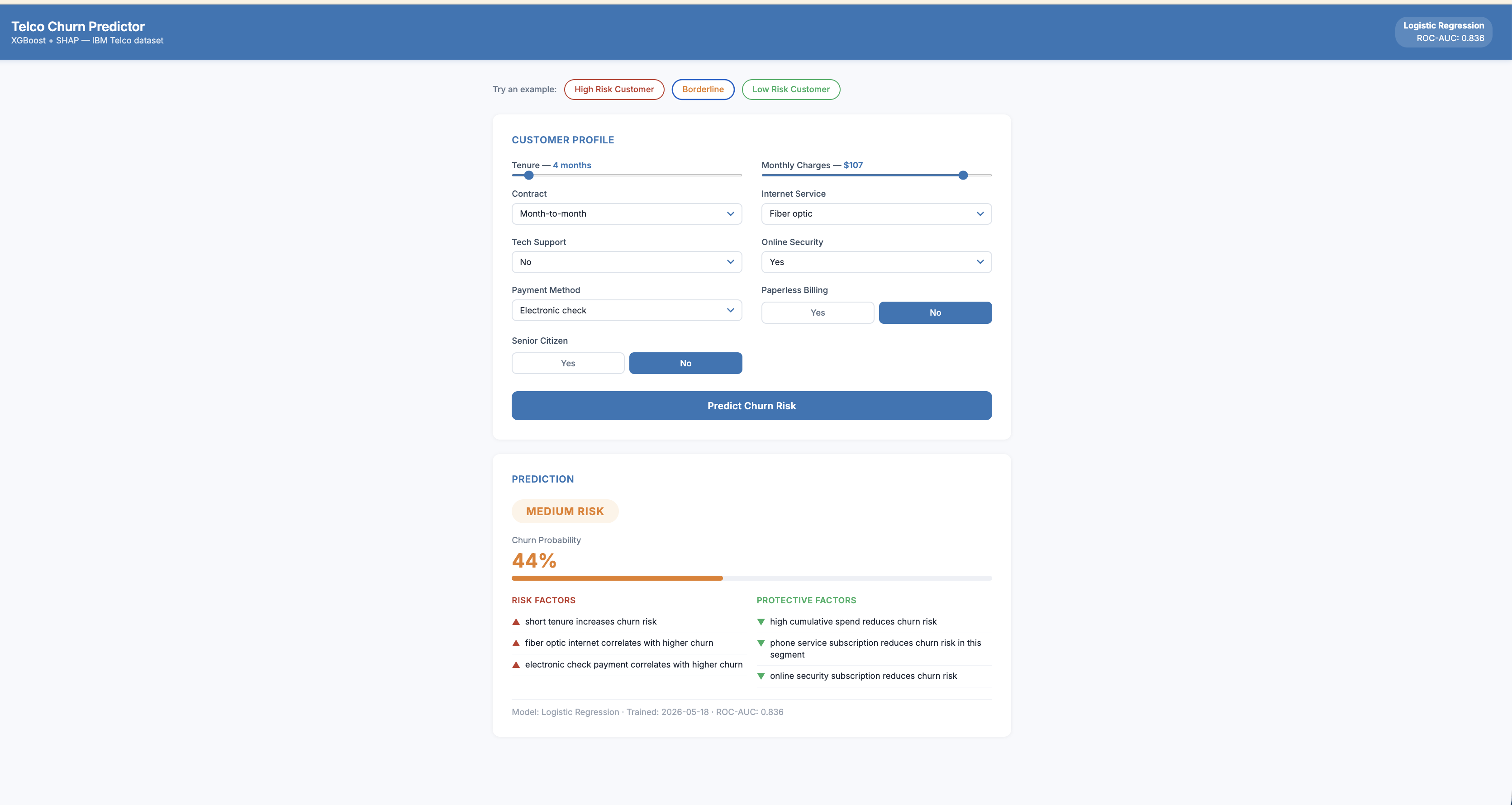
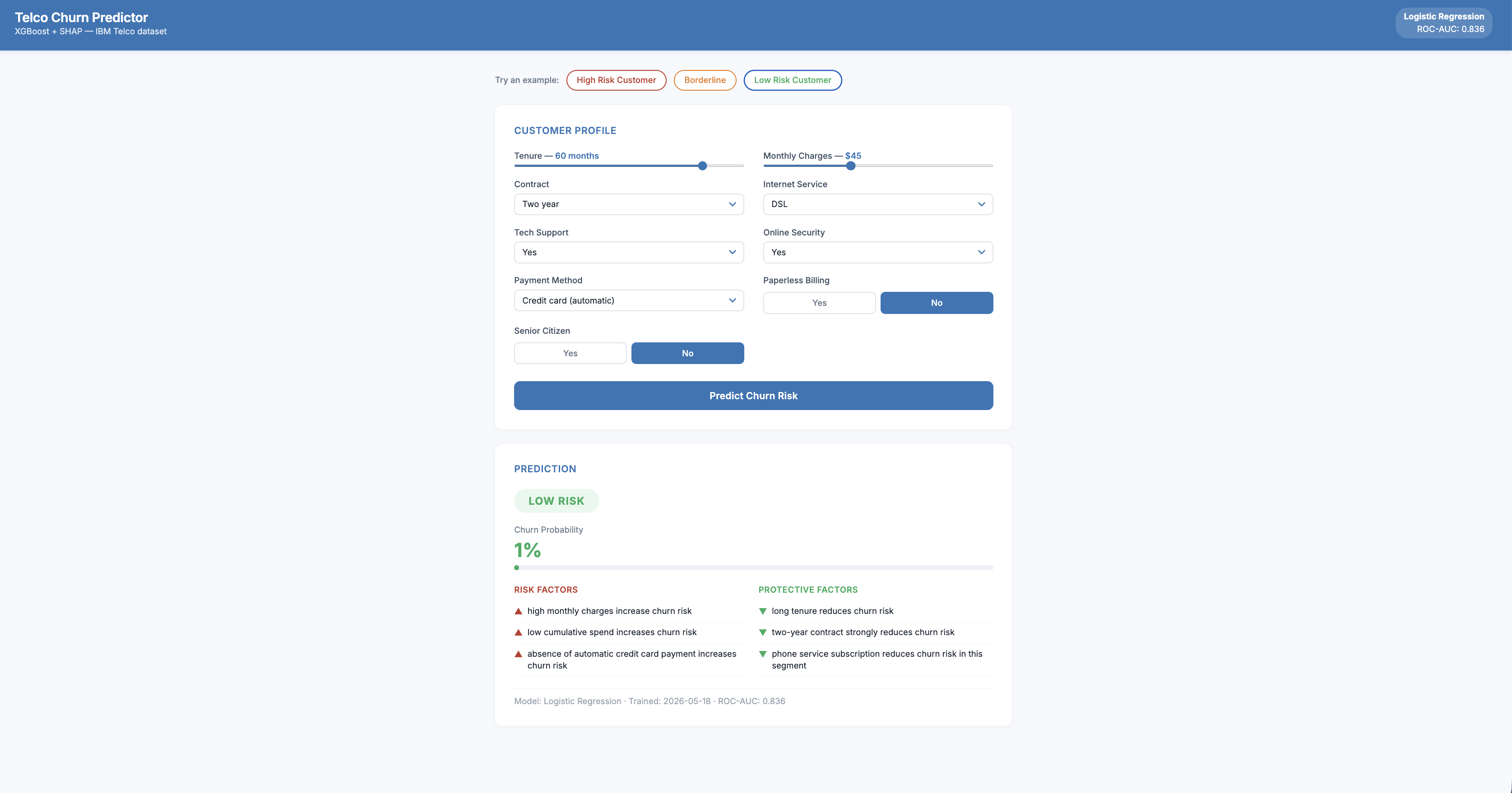
The Flask API accepts customer attributes, preprocesses them to match the training pipeline exactly (manual one-hot encoding to avoid a single-row pd.get_dummies bug), runs the trained model, computes feature contributions, and returns the probability, risk tier, and natural-language factors in a single JSON response. Deployed on Azure App Service with gunicorn and a 600-second timeout to keep the explainer warm between requests.
Quick Facts
Overview
Problem
Telecom companies lose 15–25% of customers annually to churn. Identifying at-risk customers before they cancel is worth millions in retained revenue — but a classifier score alone is not actionable. A retention team needs to know not just who is at risk, but why, and what specific intervention to offer.
The secondary problem: understanding where foundation models (LLMs) can replace a trained classifier versus where they fall short. For teams without labelled training data, knowing Bedrock's zero-shot ceiling on this task is a concrete, reproducible answer.
Solution
A three-stage pipeline: train, explain, serve.
Training: three classifiers evaluated by ROC-AUC on a stratified 80/20 split. The winning model (Logistic Regression) and its scaler are serialised with joblib and versioned in a model registry CSV.
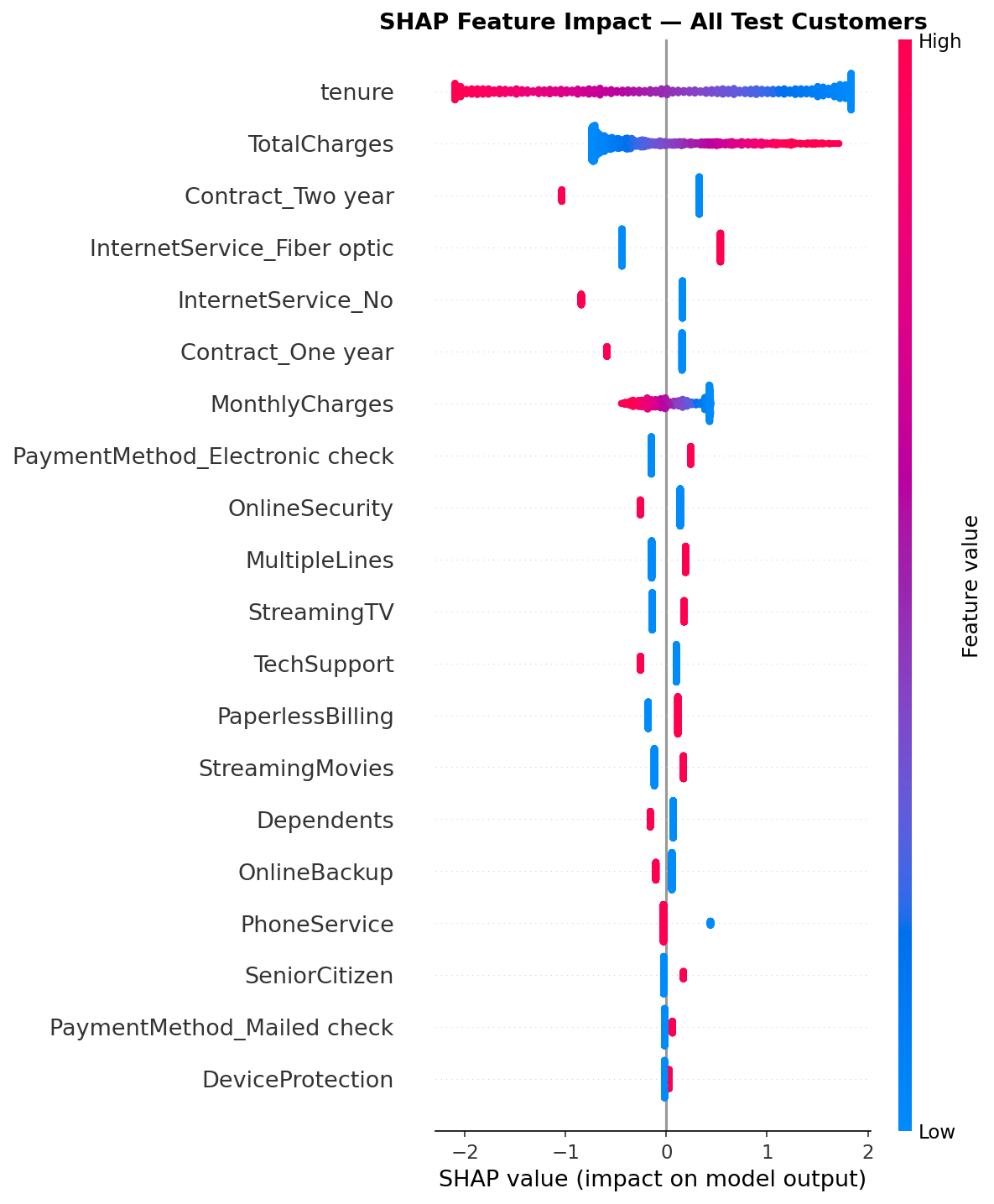
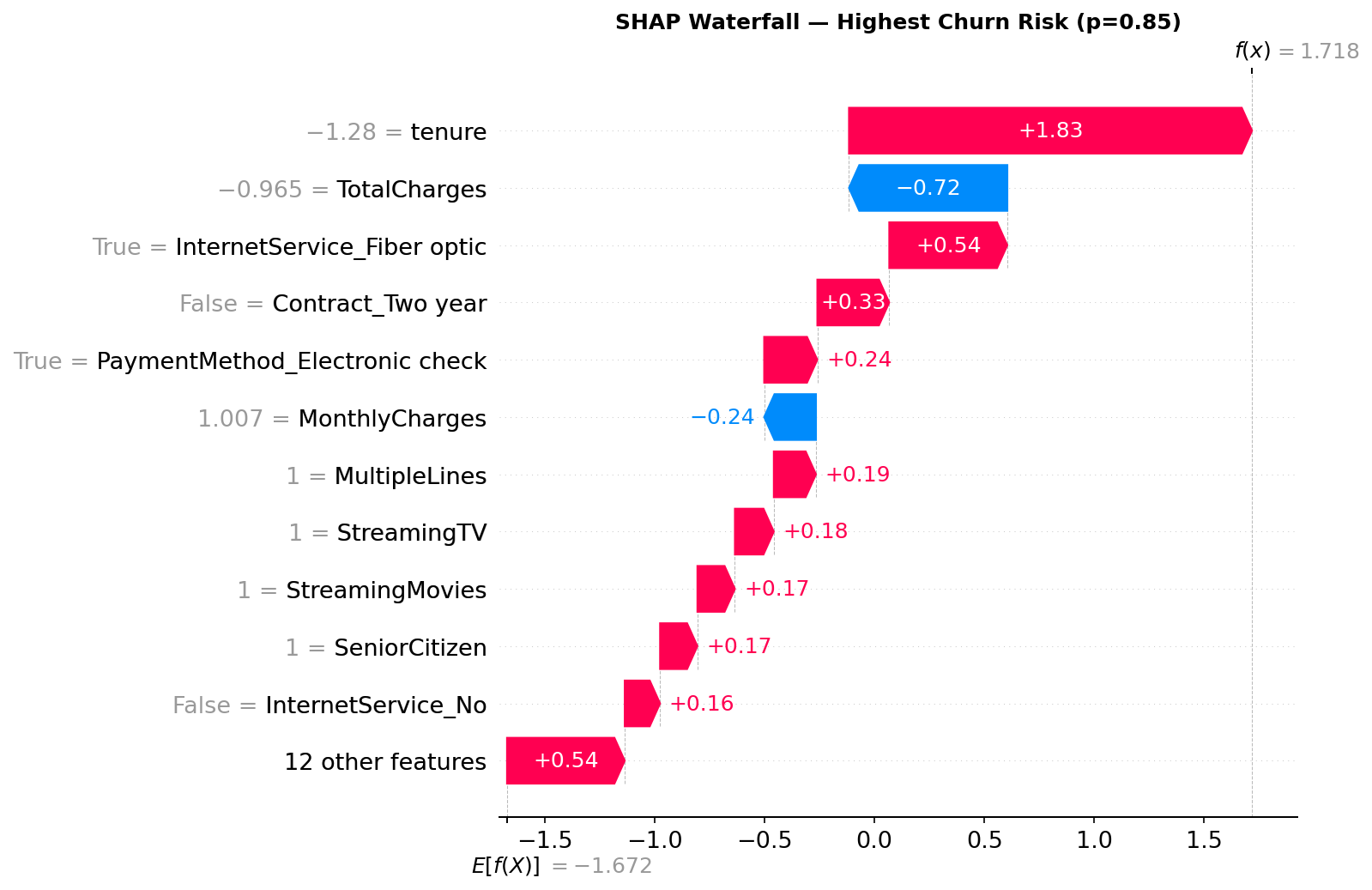
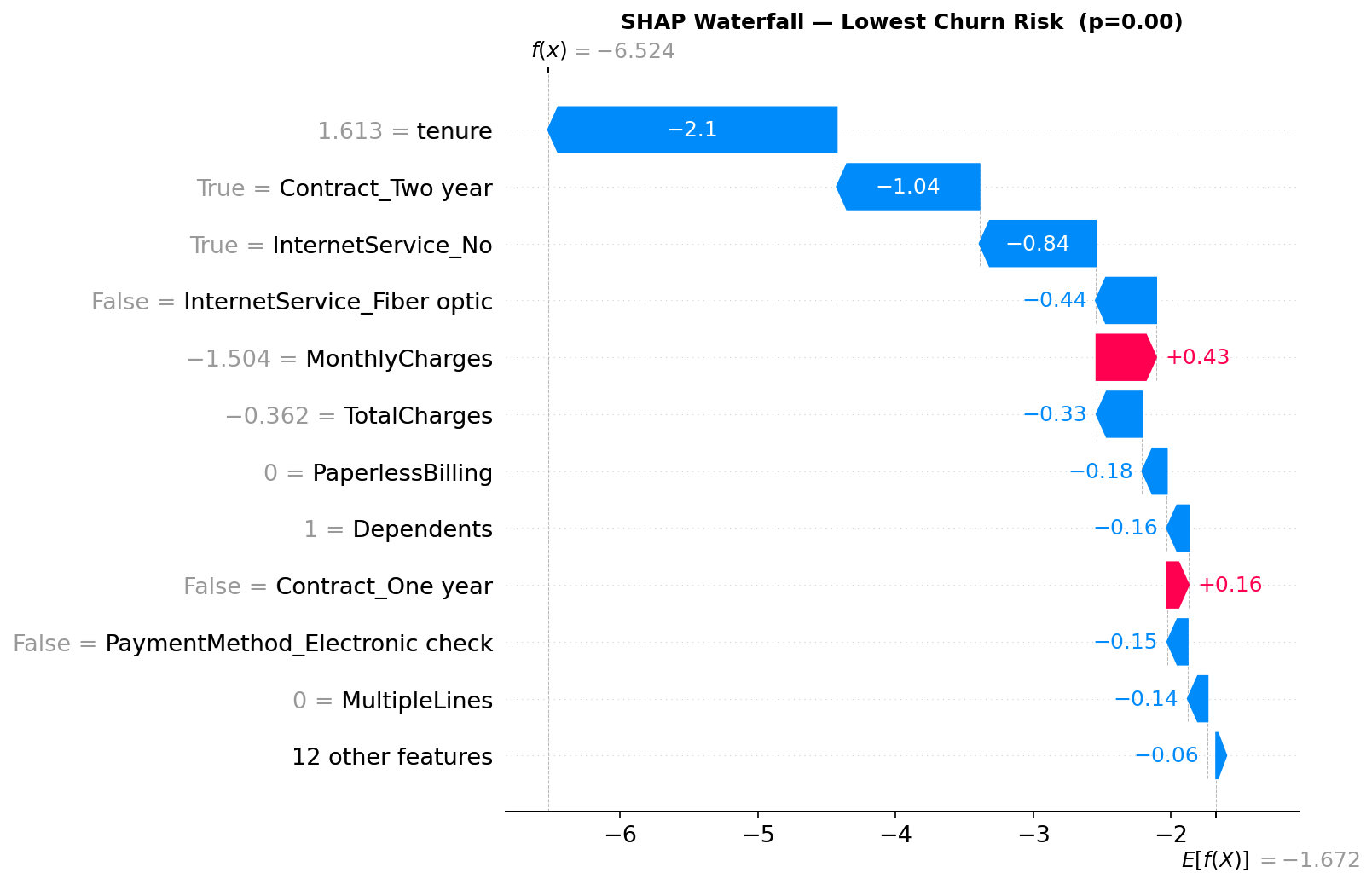
Explanation: a feature contribution module computes per-prediction explanations. A custom shap_to_language.py module maps every feature contribution to a human-readable sentence — e.g. "two-year contract strongly reduces churn risk" — sorted by magnitude and surfaced as top risk and protective factors.
Serving: a Flask REST API with a single /predict endpoint. Manual one-hot encoding replicates the training pipeline on a single row without the pd.get_dummies baseline-dropping bug. A model registry endpoint exposes training metadata. The frontend demo lets users adjust 9 customer attributes and see predictions update in real time.
Benchmarking: a standalone script samples 10 churned and 10 retained customers from the test set, generates plain-English customer profiles, calls Amazon Bedrock one call per customer, and produces a side-by-side confusion matrix plot comparing zero-shot LLM vs trained classifier.
Challenges
Single-row preprocessing bug: pd.get_dummies(drop_first=True) on a single-row DataFrame drops the one value it sees — not the baseline category. A customer with a "Two year" contract would have the Two-year dummy silently zeroed out, collapsing it to the Month-to-month baseline. Fixed by replacing get_dummies with explicit integer assignments for every categorical column.
Explainability library version incompatibility: LinearExplainer returned Python floats in some library/numpy version combinations, causing AttributeError in the beeswarm plot. Fixed by casting all explainer output to np.float64 before passing to visualisation functions.
Amazon Bedrock model deprecation: the originally specified Claude Haiku model ID was marked Legacy. Discovered the correct cross-region inference profile ID (us.anthropic.claude-haiku-4-5-20251001-v1:0) by testing candidate IDs directly. Further issue: the model returned JSON wrapped in markdown code fences — stripped before parsing.
Azure startup timeout: the B1 App Service plan (1.75GB RAM) successfully initialises the explainer + XGBoost at startup but takes ~17 seconds. The deployment polling timed out before the process stabilised — the app was running before the CLI reported success.
Results / Metrics
Logistic Regression: Accuracy 0.8031, Precision 0.6483, Recall 0.5668, F1 0.6049, ROC-AUC 0.8362
XGBoost: Accuracy 0.7783, ROC-AUC 0.8196
Random Forest: Accuracy 0.7818, ROC-AUC 0.8194
Amazon Bedrock Claude Haiku 4.5 zero-shot: 70% accuracy on 20-customer sample — tied with XGBoost on the same sample. XGBoost errors skewed toward false negatives (5 missed churners, 1 false alarm); Bedrock errors were balanced (3 false negatives, 3 false positives), suggesting LLMs apply more symmetric heuristics without label-frequency bias from training data.
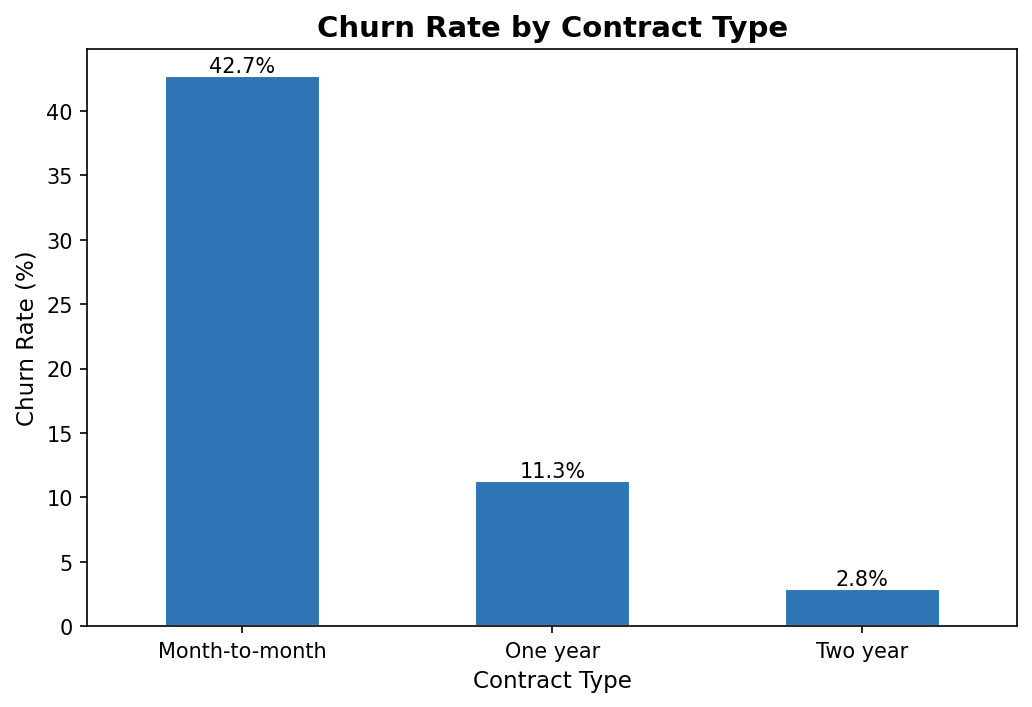
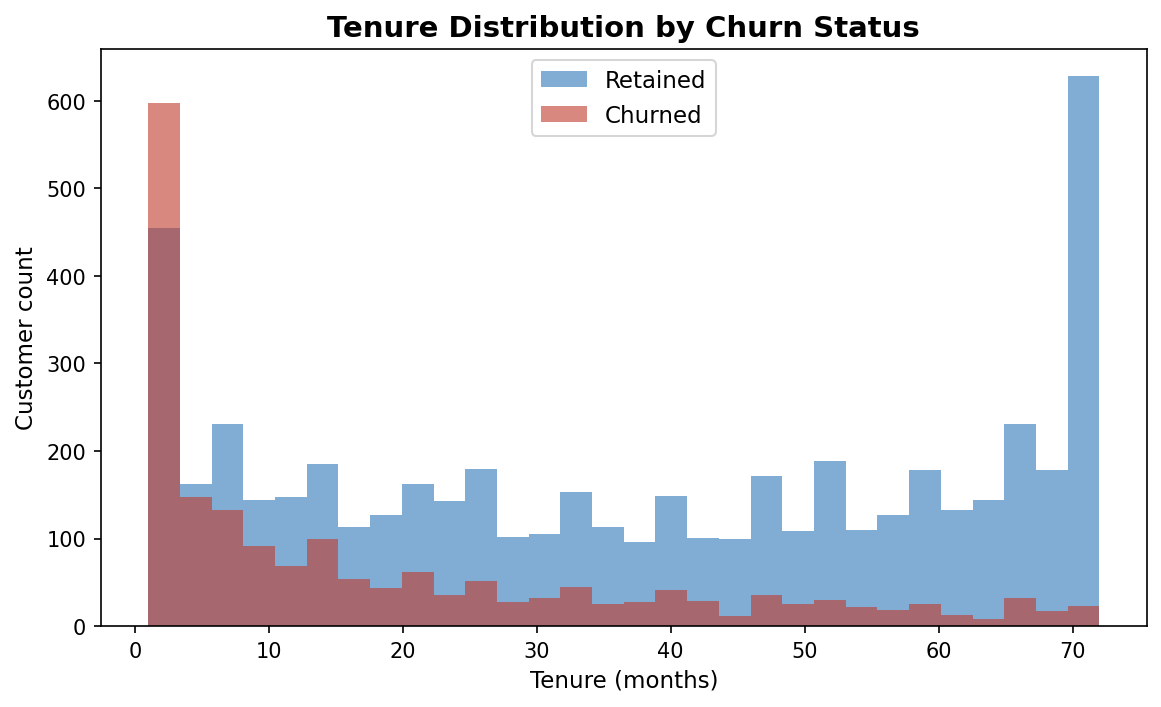
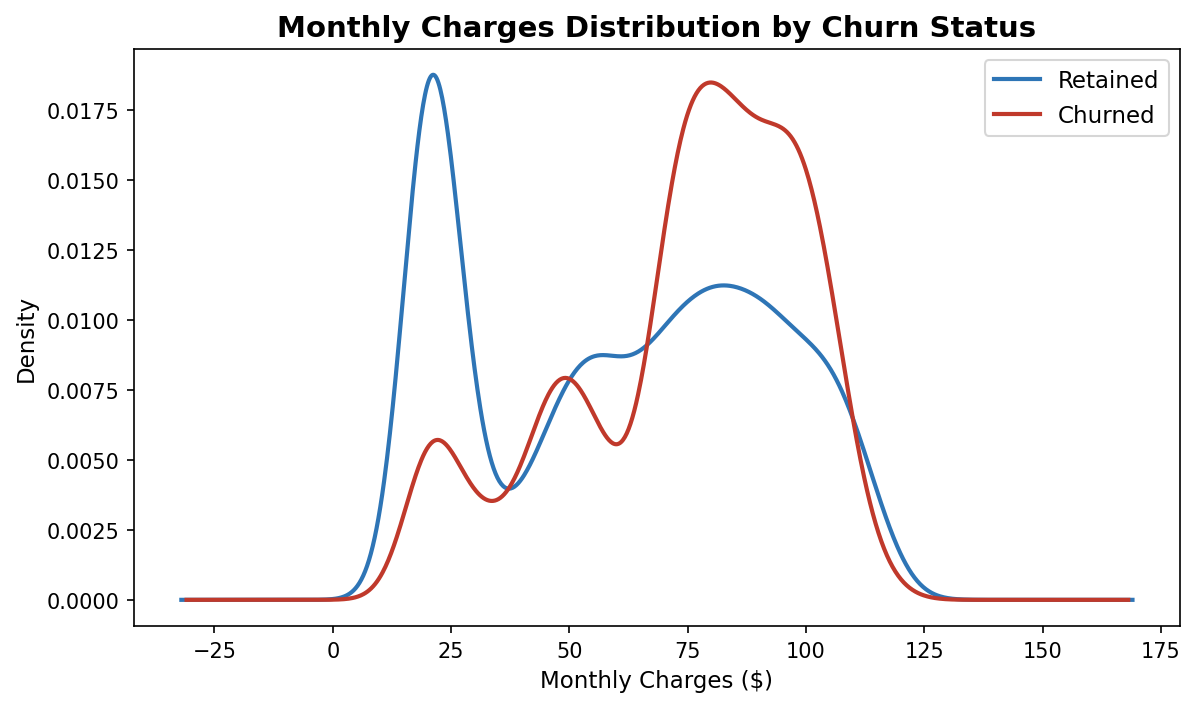
Feature contribution analysis confirmed contract type and tenure as the dominant churn drivers: two-year contract carries the highest protective weight (0.31), fiber optic internet the second-largest risk factor (0.18), and electronic check payment the third (0.14). These translate directly into three retention interventions: contract upgrade offers, service bundle discounts for fiber customers, and automatic payment incentives.
Live at https://telco-churn-predictor.azurewebsites.net
Screenshots
Click to enlarge.
Click to enlarge.